
- 5%
Rethinking Our Understanding of Periodontal Disease Introduction
Based on recent and ongoing research, we must re-orient our understanding of periodontal and peri-implant diseases and our existing approach to diagnosing oral lesions. A complete examination should include a physical and radiographic examination and the OralFitnessCheck. This oral biomarker evaluation allows us to look at our examination results differently.
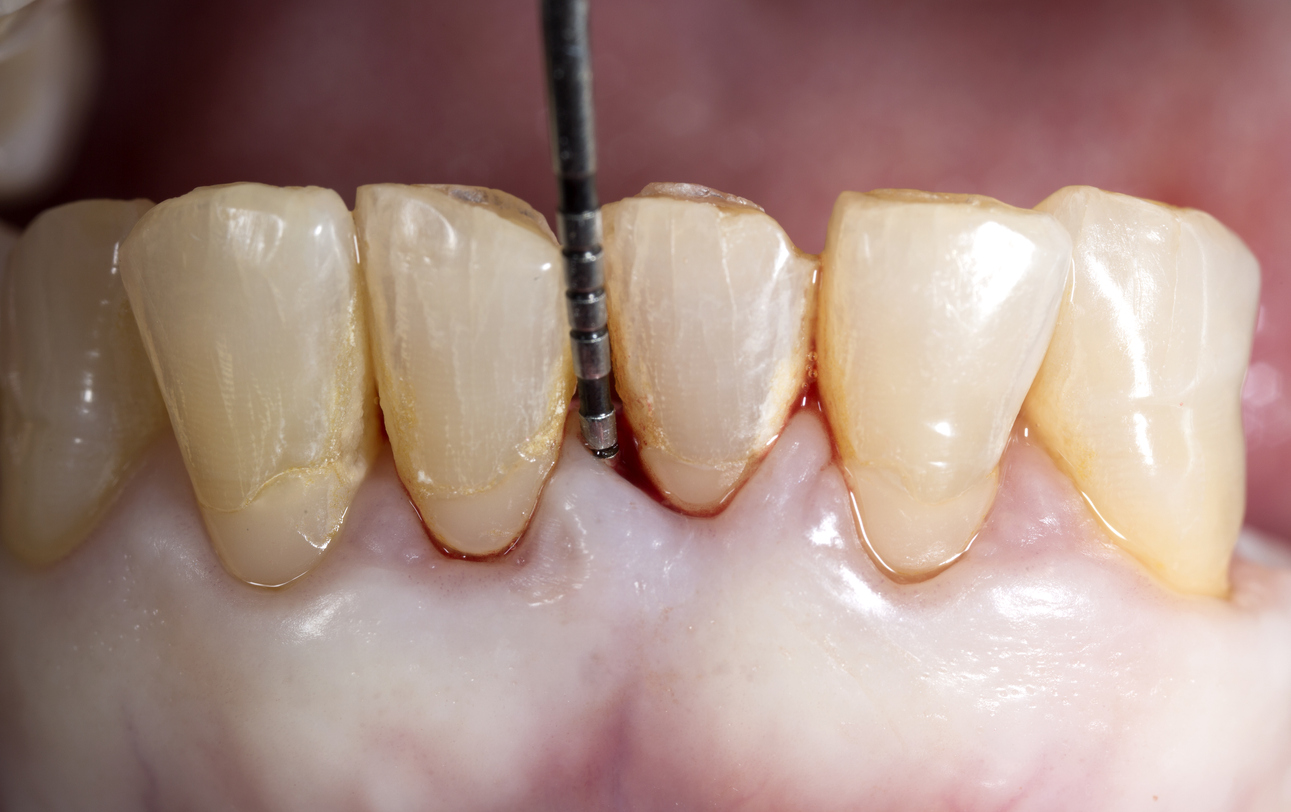
Evaluation of periodontal disease evidenced by bleeding upon probing.
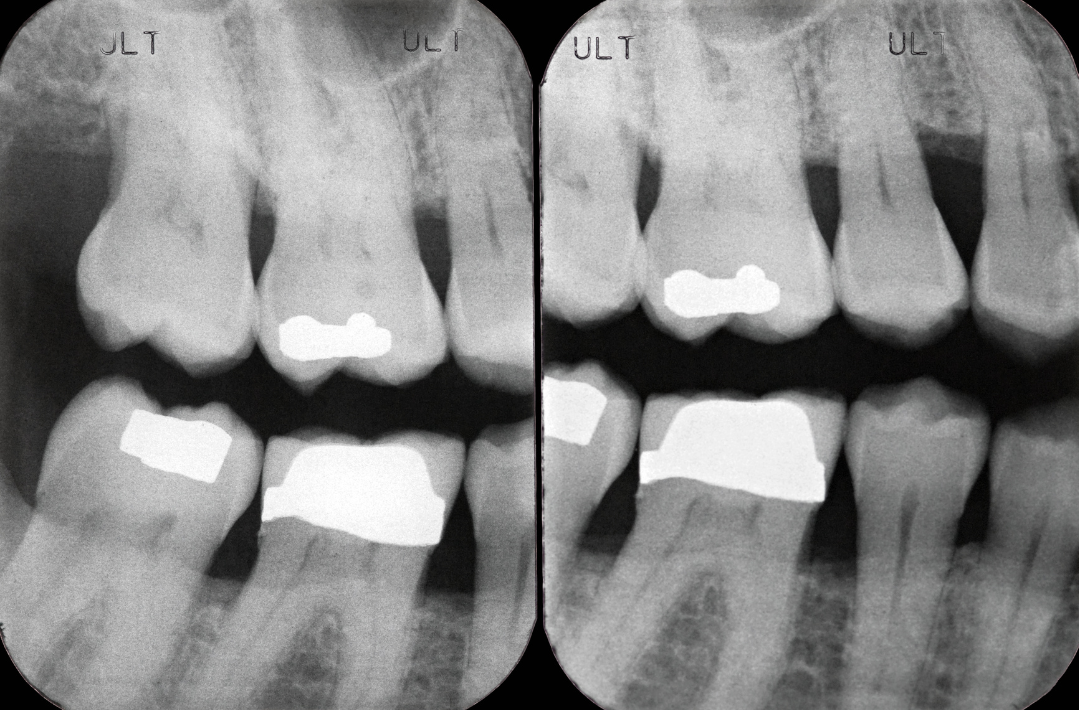
Periapical radiograph showing active periodontal disease.
Periodontal conditions are chronic, multifactorial infections, and these chronic inflammatory diseases result from an imbalance between one’s immune system and a bacterial challenge. Stress levels, age, and other factors affect the effectiveness of the immunological response.
The body’s immune resistance is episodic, and therefore, the breakdown of the supporting structures of the teeth occurs in relatively short bursts. Like many other chronic, inflammatory diseases (Rheumatoid Arthritis, Chronic Bowel Disease, Cardiovascular Disease,) they follow the “relapse-remission model” and are not linear in progression.
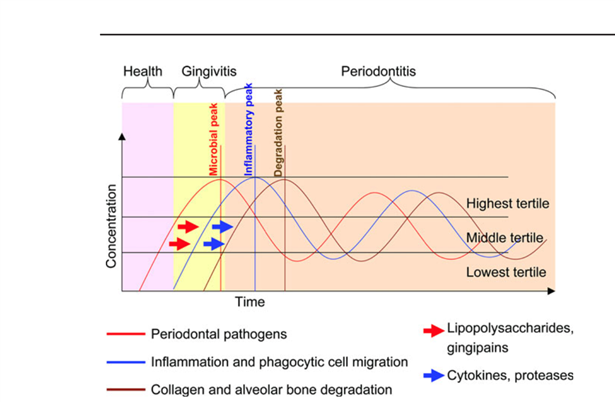
Sorsa et al. 2016 graphic illustrates the episodic nature of periodontal disease.
Unlike we previously understood, gingivitis, periodontitis, and peri-implant diseases are, therefore, characterized by periods of quiescence and activity, which is why a single patient can present with both periods of health and breakdown over time even if they have remnants of previous disease destruction (periodontal pockets, bone loss, and/or bleeding on probing, etc).
Therefore, we will see Oral Fitness results that do not fit our clinical examination results as we understand the disease and its progress!
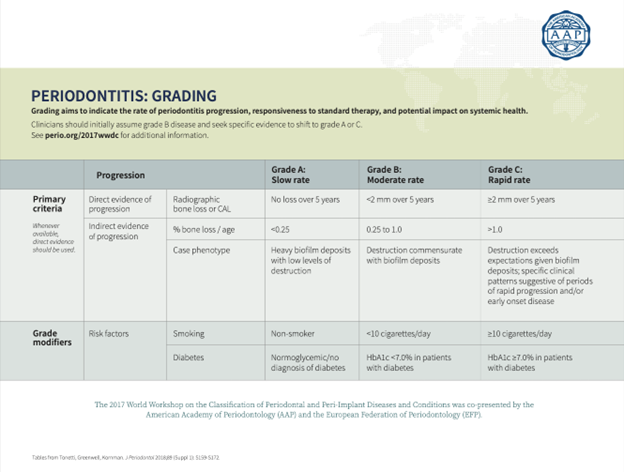
According to Socransky et al.1, oral inflammation progresses by recurrent acute episodes, described as bursts of activity for short periods, often in individual sites. These bursts can last for a few days to a few months before going into remission (when the Oral Fitness Score would be low). These bursts of activity, or lack thereof, can occur more frequently during a patient’s life based on modifying factors (stress, systemic disease, etc.). This ebb and flow of breakdown activity was also confirmed in the 2017 World Workshop on Periodontitis and Peri-Implant Disease and Conditions in 2018.2
Clinicians have been traditionally trained to evaluate periodontal disease with radiographs, periodontal measurements, and bleeding upon probing. This classic methodology determines the diagnosis solely of a patient’s current state of tissue loss or destruction, which has previously occurred. It’s like looking in our car’s rearview mirror at an accident that has already happened. Dentistry has been based on the repair of destruction found (caries, bone loss, bleeding, swelling, etc).
Our new understanding of periodontal disease means more than conventional probing, and radiographs are required! As we enter an era of molecular dentistry, we have the unique opportunity to partake in a paradigm shift in our diagnostic procedures. Rather than just looking backward (in a rearview mirror), we can look forward and understand the present activity level of the breakdown around teeth, which is often invisibly clinically!
However, this can be confusing to us based on our training, and we may say that the test is inconsistent, too variable, or incorrect, but this view is based on our defect repair training style
Utilizing a point-of-care, chairside, oral biomarker screening tool, OralFitnessCheck, we can identify the pre-clinical tissue breakdown process, which an examination cannot detect. On the other hand, bone loss, pocketing, and even bleeding on probing can be present, but the Oral Fitness level may be low because the disease is in a state of remission at that particular time and not in the active phase or burst of the disease.
This confuses us as clinicians as we have never been able to determine the breakdown activity at a particular moment. Our only previous method was to wait and watch to see if it got worse or progressed further and, in the process, lose more supporting tissue. Again, the Oral Fitness Score indicates the present activity of the breakdown process, not just a measurement of what has already occurred.
Therefore, we propose that a clinical oral health examination requires a physical and radiographic examination and should be combined with an oral fluid analysis with OralFitnessCheck. This would give the clinician more complete information on the patient’s oral health. A report can be generated within five minutes. Using a simple mouth rinse approach.
OralFitnessCheck is a “Point of Care” (POC) oral wellness screening, which has many benefits in patient motivation and treatment acceptance!
Note: Oral Fitness screening does not provide a diagnosis. Instead, it offers additional information to motivate the patient to accept the treatment recommendations based on your clinical exam, improve their daily oral hygiene, and assist the clinician in understanding the disease’s activity and future progress.